
Intellectual Property and Comic Art: A Practical FAQ for Creators
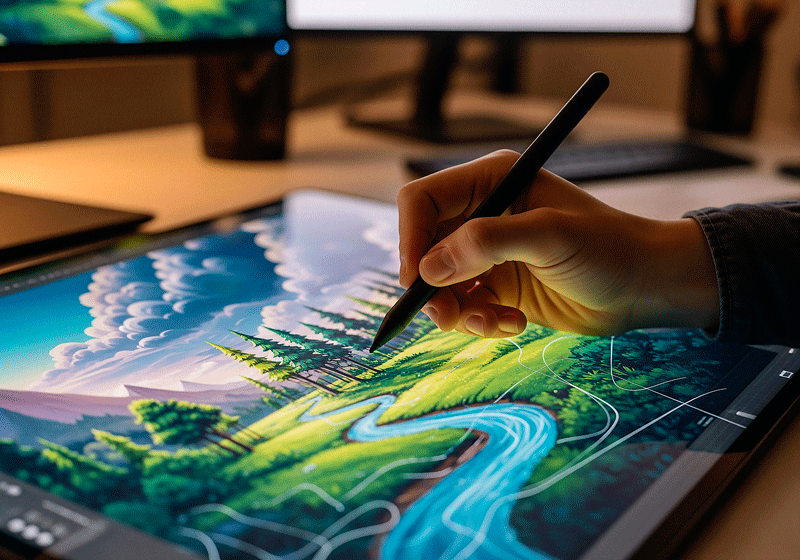
The comic art industry brings together a wide range of creators, including comic and manga artists, illustrators, cover artists, concept artists, webtoon creators, animators, designers and studios. Many creators sell original characters and merchandise, take commissions, publish serialized works and license their creations into animation, trading cards, translations and other commercial formats.
Behind all of these creative and commercial activities lies the same important question: who actually owns the work and what happens when someone copies it?
This guide answers the questions creators ask most often, grouped into three parts: protecting your work, earning from it and enforcing your rights.
A. Owning and protecting your work
1. What kinds of comic art does the law actually protect and under which right?
Different parts of your work are protected by different rights, and you can hold several at once:
- Copyright protects your drawings, panels, characters as drawn, scripts and finished comics. This is your main protection as an artist.
- Trademark protects the names and logos you trade under your studio name, a character’s name used as a brand, your shop name.
- Industrial design protects the appearance of a mass-produced product. For example, the shape of a figurine or the design printed on merchandise made in volume.
- Patents are for technical inventions and rarely apply to comic art (occasionally to a novel toy mechanism or process).
Most creators live in the copyright-and-trademark space. Knowing which right covers what tells you where to spend money and effort.
2. Do I need to register my comic or illustration to be protected?
No. In Malaysia, copyright is automatic: protection exists the moment an original work is created and recorded in some fixed form (on paper, as a file, online). For most literary and artistic works by an identified author, copyright lasts for the author’s lifetime plus 50 years.
There is, however, a useful step: Voluntary Notification of copyright with the Intellectual Property Corporation of Malaysia (MyIPO). It gives you a dated, official record that helps prove ownership if a dispute arises.
3. How do I prove a work is mine if there is a dispute?
Keep evidence of your creative trail: working files with metadata, layered source files, rough sketches and drafts, dated posts, and any Voluntary Notification record. Originality in Malaysia turns on the effort, skill and time you put in, so the materials that show your process are exactly what a court wants to see. Build the habit of keeping originals before you ever need them.
4. Can I protect a character (i.e. its name, its look and its personality)?
Partly, and through more than one route. The drawn character (its specific design, costume and visual identity) is protected by copyright.
The name is best protected by registering it as a trademark, especially if you build a brand around it and sell merchandise.
What the law will not protect is the bare idea or concept (such as “a cat astronaut” or “a detective in a fantasy school”). Instead, the law protects only your particular expression of it. The more consistent and distinctive your character’s visual identity, the stronger your position.
5. Is my art style protected?
No. Copyright protects specific works, not a style, technique, palette or genre. Another artist may work in a similar aesthetic without infringing, as long as they are not copying your actual drawings or characters. This is also why “inspired by” homages are usually lawful while close copies are not.
6. Is fan art of well-known characters (Marvel, DC, popular anime) legal to draw and sell?
This is the most common grey area at conventions and the honest answer is: drawing or selling art of someone else’s protected character, without permission, is technically copyright infringement, because you are reproducing a substantial part of their work.
Furthermore, ordinary commercial fan art and merchandise will usually be difficult to justify under “fair dealing”, especially if it reproduces a substantial part of a protected character. However, limited cases involving parody, pastiche or caricature may need to be assessed separately.
Notwithstanding the above, many rights holders tolerate small-scale artist-alley fan art and enforcement against individual artists is uncommon. However, tolerance is not a legal right and it can be withdrawn. Risk rises the more you commercialise it: large print runs, official-looking merchandise or anything a buyer might mistake for licensed product.
Therefore, treat fan art as a calculated risk, not a protected activity and lean on your original work to build a business you fully own.
7. If I use AI tools, who owns the output and is it even protected?
This is unsettled in Malaysia; there is no specific statute or decided case directly on point. Two practical principles help:
- Protection requires human authorship. Malaysian copyright depends on original effort, skill and judgment by a human creator. Therefore, copyright protection should not be assumed for purely AI-generated output. On the other hand, where a human has made substantial original creative contributions (for example, you paint over, heavily edit, compose or substantially rework the output), those human-authored elements may be protectable, but this remains a risk-based position pending clearer Malaysian authority.
- Inputs carry risk too. Uploading, copying, fine-tuning on or using another artist’s copyrighted work as an AI reference may raise infringement issues, especially where the resulting output reproduces a substantial part of that work. The legal position remains open in Malaysia.
For now, disclose AI use in your contracts, keep records of your own creative contribution and do not assume AI output is automatically yours to sell or license.
B. Earning from your work: contracts, licensing and commercialisation
8. I take commissions. Who owns the finished artwork (me or the client)?
This is the single most important point for freelancers in Malaysia, and it surprises most artists: by default, the person who commissions and pays for the work owns the copyright, not you. Under the Copyright Act 1987, copyright in a commissioned work is deemed to transfer to the person who commissioned it, unless your contract says otherwise. The same default applies to work you create as an employee, where the copyright goes to your employer.
The fix is simple but essential: put it in writing. State in your commission terms that you retain copyright and are granting the client a defined right to use the work (see Q9), rather than handing over ownership. Without that written term, the law assumes you gave the ownership away.
9. What is the difference between assigning and licensing my rights, and which should I choose?
- Assignment means selling your ownership outright. Once validly assigned, the work is no longer yours.
- Licensing means keeping ownership and giving someone permission to use the work within agreed limits.
For most creators, licensing is the better default because you keep the asset and can earn from it again. A licence can be tailored by scope (what they may do), exclusivity (whether only they may do it), territory, duration and media (print, digital, merchandise). Charge more for broader or exclusive rights. Assign only when the deal and the price truly justifies giving the work away permanently.
In Malaysia, both assignments and copyright licences should be in writing.
10. What should a basic commission or merchandise agreement cover?
Keep it short but make sure it answers:
- Deliverables : what is being made, in what format, how many revisions.
- Rights : do you assign or license, and for what use, where and how long?
- Fee and royalties : flat fee, royalty, or both; payment schedule.
- Credit : how you will be named.
- Limits : uses the client may not make (for example, resale, sublicensing, NFT minting, AI training).
- Cancellation : what happens, and what is paid, if the project stops.
A one-page written agreement prevents most disputes and is far cheaper than resolving them later.
11. Do I keep any rights even after I sell or assign my work?
Yes – your moral rights.
Separate from the economic rights you can sell, moral rights include the right to be identified as the author and the right to object to distortion or treatment of your work that harms your honour or reputation. These stay with you and cannot be assigned away, even when you transfer or license everything else. Make sure contracts respect your credit and do not allow your work to be altered in damaging ways.
12. I want to build a brand around my characters and sell merchandise. What protection do I need?
Layer your rights deliberately:
- Register your name and logo as trademarks before you scale, so no one else can trade under them. The Trademarks Act 2019 also allows non-traditional marks (such as a distinctive colour, shape or sound).
- Rely on copyright for the character designs and artwork themselves.
- For mass-produced products, consider industrial design registration for the product’s appearance, but note an important trap: once a design is registered as an industrial design, ordinary copyright protection in that design generally falls away. Choose your route on purpose, especially for merchandise made in volume.
- Record your licences in writing with every manufacturer, printer and collaborator, stating clearly that you retain ownership and they are only producing under licence.
13. A publisher or platform (for example, a webtoon platform) wants my series. What should I check before signing?
Read the rights clause closely, because platform contracts often ask for a lot. Check:
- What rights you are granting : exclusive or non-exclusive? Worldwide? All media or just the platform?
- Duration and reversion : when do rights come back to you?
- Money : advances, revenue share and how it is calculated and reported.
- Derivative and adaptation rights : does the deal sweep in merchandise, animation, translation or sequels?
- Termination and credit : how you exit and how you are named.
If a clause grants “all rights, worldwide, in perpetuity,” pause and negotiate. You can usually license what the platform genuinely needs while keeping the rest.
14. Someone wants to adapt my comic into animation, turn it into merchandise or translate it for another country. How do I handle that?
Adaptation and translation rights can be licensed separately and you do not have to give all rights to one party. Merchandising should also be dealt with separately, but it is usually not a single standalone copyright right. It is normally a bundle of rights, which may include the right to reproduce your artwork or character design on products, use your character name or logo, manufacture and sell the products, and where applicable, use your trademarks or registered industrial designs.
Grant each right narrowly and clearly. State the permitted use, territory, duration, language, product category, platform, exclusivity, royalty or fee, approval rights, quality control and what happens when the licence ends.
For overseas deals, remember that copyright is recognised in most countries automatically (Malaysia is part of the international copyright framework), but trademarks and designs are territorial. Therefore, if you plan to sell a branded product abroad, register your mark in those markets too. The Madrid Protocol lets you file for trademark protection in many countries through a single application via MyIPO.
15. Can I claim back rights I signed away years ago?
Usually not. A valid written assignment generally transfers ownership for good, which is exactly why caution at the start matters more than regret later. Always check a contract for a reversion clause (rights returning to you after a period or on certain events). Even where you have transferred everything, your moral rights remain.
C. When someone copies you: enforcement
16. Someone copied my art or is selling my character on merchandise. What can I do?
Work from the cheapest, fastest options upward:
- Gather evidence : screenshots, listings, dates and your own proof of ownership.
- Send a cease-and-desist : a clear written demand to stop, often enough on its own.
- File a platform takedown : marketplaces and social platforms have reporting tools for infringement.
- Negotiate : sometimes the right outcome is a paid licence or a settlement.
- Escalate : a civil court claim and/or a criminal complaint to the authorities (see Q18) if the matter is serious or persistent.
17. What can a court order against an infringer?
In a civil claim, the court can grant an injunction (an order to stop), damages or an account of the infringer’s profits, statutory damages and delivery up of infringing copies, among other orders. These remedies are designed both to stop the infringement and to compensate you.
18. Is copyright infringement a crime in Malaysia or only a civil matter?
It can be both. Alongside civil claims, the Copyright Act 1987 creates criminal offences carrying significant fines (calculated per infringing copy) and possible imprisonment. The Copyright (Amendment) Act 2022 strengthened enforcement and expressly targeted online and streaming piracy, and it widened the authorities’ powers to investigate and seize. Enforcement is handled by the Ministry of Domestic Trade and Cost of Living (KPDN), to which you can lodge a complaint about commercial infringement.
19. Someone is using a name or brand similar to mine. Is that the same as copying my art?
No. That is a trademark issue, not a copyright one. If your mark is registered, you can act for trademark infringement. If it is unregistered, you must rely on the common law action of “passing off,” which requires you to prove you have built up reputation in the name, that the other party is misleading the public and that you are harmed. Passing off is harder and costlier to prove, which is the practical reason to register the names and logos you trade under.
20. How much does enforcement cost and is it worth pursuing?
Many disputes can be resolved before trial through takedowns, demand letters, settlement or licensing discussions.
Litigation is more expensive and slower, so weigh the commercial value of what is at stake against the likely spend and start with the lighter options.
The best cost control is upfront: clear written contracts, Voluntary Notification of key works and registered trademarks all make enforcement faster and cheaper if you ever need it.
This article is written by
Azarith Sofia Binti Aziz
Registered Trademark, Patent and Industrial Design Agent
Principal Associate, Low & Partners